
Italy’s small businesses scrap for survival
Italy’s small businesses scrap for survival

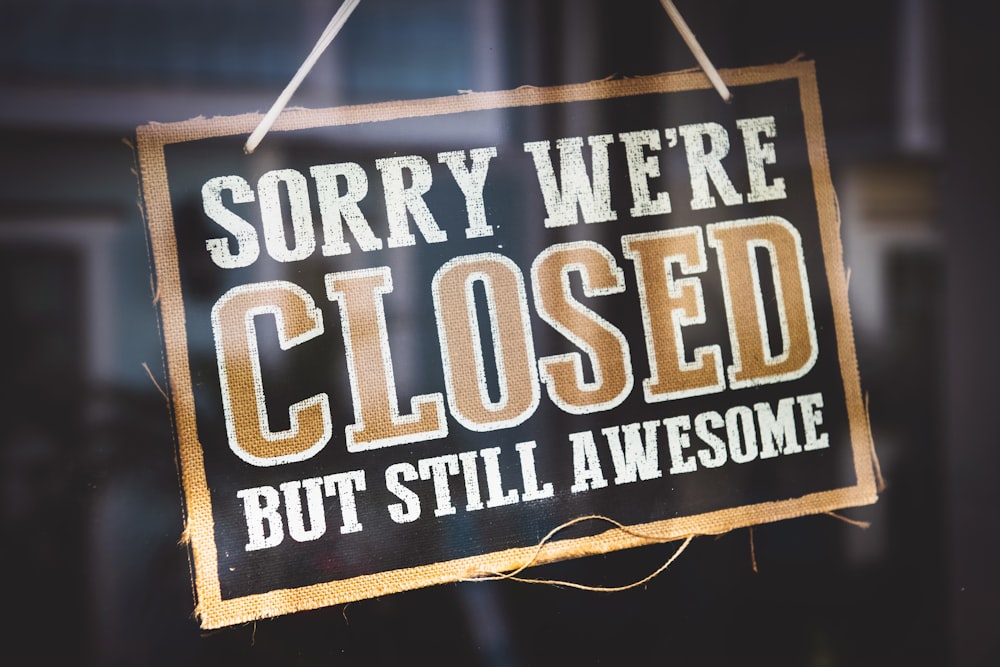
Sorry We're closed

Three years ago, this owner of a small business in Italy’s industrial Veneto region lost his life savings, when two regional banks failed after the European debt crisis and were wound down, wiping out shareholders. Today, he is struggling with a new torment: the outbreak of coronavirus in northern Italy that has devastated lives and shut businesses across the region since mid-March. His company’s revenues have dried up even as his overheads remain unchanged.
“I am scared for the future,” he said.
Many companies rely on local banks for funds and do not have bonds or investors to draw on
Northern Italy is home to more than 2m businesses, according to Prometeia, a research and consulting firm. Lombardy, the region around Milan that has been in lockdown since mid-March, has more than 900,000 of them.

Andrea Guerra, a former chief executive of Italian eyewear multinational Luxottica and government adviser who is advising small business owners, said the sector was suffering a “balance sheet crisis”.

This is a particular problem for the average Italian business, he said, because they generally relied on one local bank for funding — via short-term loans of a few months based on their revenue flows — and did not have bonds or institutional investors to draw on. By contrast in the UK, for example, the average business has “cash in hand” to keep paying their operating expenses for 18 months, according to analysts’ estimates.


Comments

Popular posts from this blog

Italy: Firms shake lockdown using shortcut in coronavirus law

Italy: Firms shake lockdown using shortcut in coronavirus law The government last week extended non-essential business closures to May 3. But more than 100,000 mainly small- and medium-sized companies have applied to keep going or partially reopen. In principle, a key hurdle for companies to do business should be that they can prove they are part of a supply chain to businesses that are deemed “essential” in a government decree, such as food, energy or pharmaceutical companies. But the government, facing a backlog of applications, has clarified Italy’s lockdown laws to say no companies need to wait for government approval to go ahead. More than 105,000 firms have applied to be considered part of essential supply chains, the interior minister said on Wednesday, in a guideline on its website to clarify the lockdown rules. Of those, just over 2,000 have been turned down and told to suspend their business. More than 38,000 are being investigated and the rest are waiting to be...

German government overreacted on COVID-19

German government overreacted on COVID-19 Christian Drosten, director of Berlin's Institute of Virology at the Charité Hospital, spoke to The Guardian on Sunday, days after the country began lifting some lockdown restrictions. Germany's lockdown started to lift on April 20, with the opening of smaller businesses like car dealerships, bike shops, and book stores. The country plans to start reopening schools on May 4. Drosten said he felt like the government was being pressured to reopen, and that he feared that a blasé attitude toward the relatively tame outbreak in Germany could lead to a new burst of infections.  The basic reproduction number, also known as R0, represents the average number of people a single patient is expected to infect and is a key figure to measuring countries' outbreak. You can read Business Insider's explainer to it here. More: https://www.businessinsider.com/germany-coronavirus-restrictions-so-effective-people-think-overreaction...

What with retail in Germany?

What with retail in Germany? Sort of satisfied, fear of discount battles, hope for the opening of all stores–this is how the mood in the fashion industry can be described after the first week with the partial opening of the stores in Germany. Almost two-thirds of the fashion retailers were satisfied with the restart. This is one of the results of an online survey carried out by our sister publication TextilWirtschaft among more than 200 managers in the retailing sector this Monday. The result is somewhat put into perspective, as most of them had not set the bar very high for this first week of partial opening. Only 30% said they expected more from this new opening week. At just under half, sales were significantly lower than in a "normal" April week. The situation was similar in terms of frequency. The picture in terms of customers' buying behavior is completely mixed. Every second retailer said that his customers were more reserved than usual. However, this w...