
euractiv: Time for a European public export credit insurance programme?
euractiv: Time for a European public export credit insurance programme?

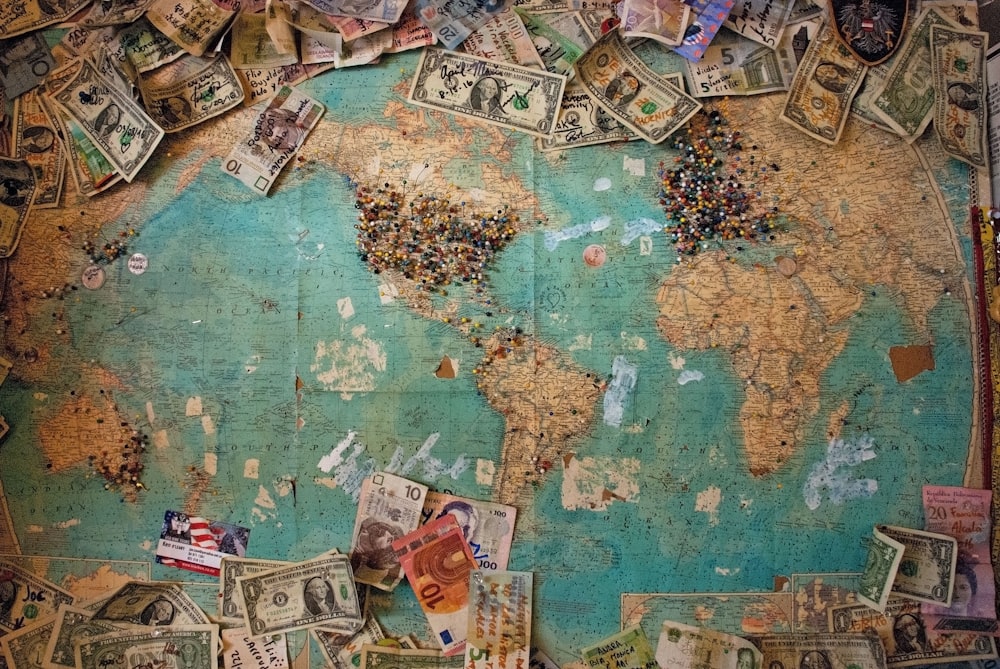
U.S. dollar banknote with map

Over the last decade, public export credit insurance has become one of the major instruments of trade policy, used to support and encourage exports. 

To encourage exports means to increase domestic production, economic growth and jobs and have a better balance of trade and public finances.

However, despite the strong public support that exporters from some countries have, in particular in East Asia, European exporters do not benefit from support at the EU level and are facing a mosaic of national public export credit insurance programmes.

We believe that policymakers should examine the possibility of establishing a European public export credit insurance programmes that could provide risk cover, in addition to national programmes, for extra-EU exports from all member states. Such a unified instrument would allow exporters to benefit from the collective European economic and commercial strength.

Public export credit insurance protects exporters from the risk of non-payment of goods or services exported. It is provided by Export Credit Agencies (ECA) and is backed by a state guarantee enabling exporters to continue their activities with a significantly reduced risk.

In the EU there exists only a regulatory framework for member states’ public export credit insurance, but no EU insurance programme for extra-EU exports is provided, and exporters depend on their national insurance programmes.

On the other side, the European Commission reports that the aggregate value of support for medium and long-term transactions, of top five EU public export insurance providers, Germany, France, Sweden, Italy and Netherlands was around €244 billion.

Establishing public export insurance of the EU would not only help to kick-start the EU economy and increase its presence around the world but would also help to equalise export opportunities of companies across the Union.


Comments

Popular posts from this blog

Italy: Firms shake lockdown using shortcut in coronavirus law

Italy: Firms shake lockdown using shortcut in coronavirus law The government last week extended non-essential business closures to May 3. But more than 100,000 mainly small- and medium-sized companies have applied to keep going or partially reopen. In principle, a key hurdle for companies to do business should be that they can prove they are part of a supply chain to businesses that are deemed “essential” in a government decree, such as food, energy or pharmaceutical companies. But the government, facing a backlog of applications, has clarified Italy’s lockdown laws to say no companies need to wait for government approval to go ahead. More than 105,000 firms have applied to be considered part of essential supply chains, the interior minister said on Wednesday, in a guideline on its website to clarify the lockdown rules. Of those, just over 2,000 have been turned down and told to suspend their business. More than 38,000 are being investigated and the rest are waiting to be...

Italy’s small businesses scrap for survival

Italy’s small businesses scrap for survival Three years ago, this owner of a small business in Italy’s industrial Veneto region lost his life savings, when two regional banks failed after the European debt crisis and were wound down, wiping out shareholders. Today, he is struggling with a new torment: the outbreak of coronavirus in northern Italy that has devastated lives and shut businesses across the region since mid-March. His company’s revenues have dried up even as his overheads remain unchanged. “I am scared for the future,” he said. Many companies rely on local banks for funds and do not have bonds or investors to draw on Northern Italy is home to more than 2m businesses, according to Prometeia, a research and consulting firm. Lombardy, the region around Milan that has been in lockdown since mid-March, has more than 900,000 of them. Andrea Guerra, a former chief executive of Italian eyewear multinational Luxottica and government adviser who is advising small bus...

thechronicleherald.ca: France to tighten controls on non-EU foreign investment

thechronicleherald.ca: France to tighten controls on non-EU foreign investment Currently non-European investments in French companies do not need government approval as long as the stake is 25% or less. PARIS (Reuters) - The French government will tighten restrictions on foreign investments from outside Europe in French companies to limit foreign control over strategic sectors and technologies, the finance minister said on Wednesday. The government already at the start of the year tightened controls on non-European foreign investments, in particular by lowering the threshold for state-vetting to 25% from 33% previously. Le Maire also said that he would add biotechnology companies to a list of sectors that requires government approval for an investment from outside Europe to go ahead. "In this period of crisis, some companies are vulnerable, some technologies are fragile and could be bought by foreign competitors at a low cost. I won't let it happen," Le Mai...