
Ben Sills & Bloomberg: “How European countries plan to reopen their economies from the coronavirus lockdown”

Ben Sills & Bloomberg: “How European countries plan to reopen their economies from the coronavirus lockdown”

red heart shaped illustration on black surface

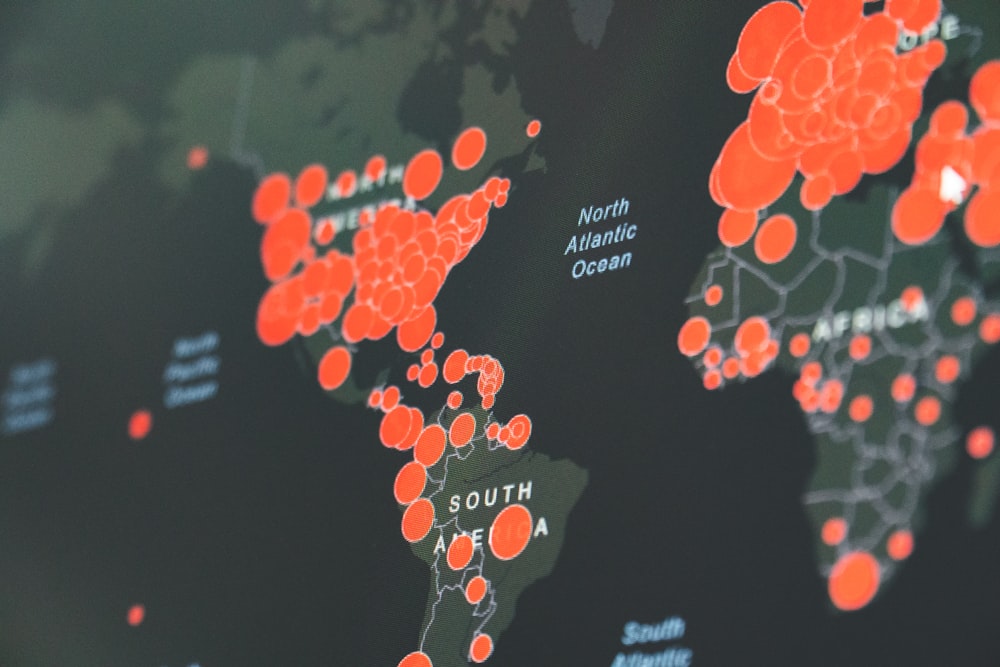
European leaders are starting to sketch out their strategy for putting the economy back to work once the coronavirus has been brought under control.

Austria and Denmark are beginning to open up some schools and shops this week and President Emmanuel Macron on Monday night told the French that he wants to begin phasing out restrictions from May 11. Chancellor Angela Merkel is due to discuss her plans with German state premiers on Wednesday while the European Commission has drafted a plan to coordinate the moves.

Governments are trying to balance the desperate need to halt the damage to the economy against the risk of a resurgence of the pandemic. The number of new cases in Europe has stabilized in recent days though more than 50,000 people have died on the continent and the fatalities continue to climb.
Spain reported the lowest number of new cases since March 20 on Tuesday, increasing pressure on the government to relax its state of emergency.

So leaders are planning a gradually easing of the restrictions on economic activity. The commission, in a draft seen by Bloomberg, warned that they will have to be prepared to re-impose lockdowns if the number of infections starts to spike again.
UV light


Test Case

As one of the first countries in Europe to shut down, Austria is now a much-watched example of how to go about the task of re-opening itself up again -- and it will be an agonizingly slow and complicated process.

Austrians lined up outside hardware and gardening stores on Tuesday morning as the country became one of the first to ease lockdown measures. Stores of less than 400 square meters (4,300 square feet) can also reopen so long as they limit the number of people inside to maintain distancing. Face masks are mandatory in all shops as well as in public transport. If there’s no pickup in infections all other stores can reopen May 2 with schools, restaurants and hotels following in the middle of the month.

Comments

Popular posts from this blog

Italy: Firms shake lockdown using shortcut in coronavirus law

Italy: Firms shake lockdown using shortcut in coronavirus law The government last week extended non-essential business closures to May 3. But more than 100,000 mainly small- and medium-sized companies have applied to keep going or partially reopen. In principle, a key hurdle for companies to do business should be that they can prove they are part of a supply chain to businesses that are deemed “essential” in a government decree, such as food, energy or pharmaceutical companies. But the government, facing a backlog of applications, has clarified Italy’s lockdown laws to say no companies need to wait for government approval to go ahead. More than 105,000 firms have applied to be considered part of essential supply chains, the interior minister said on Wednesday, in a guideline on its website to clarify the lockdown rules. Of those, just over 2,000 have been turned down and told to suspend their business. More than 38,000 are being investigated and the rest are waiting to be...

German government overreacted on COVID-19

German government overreacted on COVID-19 Christian Drosten, director of Berlin's Institute of Virology at the Charité Hospital, spoke to The Guardian on Sunday, days after the country began lifting some lockdown restrictions. Germany's lockdown started to lift on April 20, with the opening of smaller businesses like car dealerships, bike shops, and book stores. The country plans to start reopening schools on May 4. Drosten said he felt like the government was being pressured to reopen, and that he feared that a blasé attitude toward the relatively tame outbreak in Germany could lead to a new burst of infections.  The basic reproduction number, also known as R0, represents the average number of people a single patient is expected to infect and is a key figure to measuring countries' outbreak. You can read Business Insider's explainer to it here. More: https://www.businessinsider.com/germany-coronavirus-restrictions-so-effective-people-think-overreaction...

Volkswagen factory just reopened

Volkswagen factory just reopened The world's largest carmaker has made 100 changes to the way its plants operate as it tries to restart business without risking the health of hundreds of thousands of workers. Its experience underscores the daunting task ahead for manufacturers as they resume work in a world still reeling from the pandemic. "We have never developed, produced and sold vehicles under these conditions before," said Bernd Osterloh, the top labor representative at Volkswagen (VLKAF). The gigantic Wolfsburg plant is located on the banks of an equally impressive feat of human engineering, the 200-mile long Mittelland Canal connecting sea and inland ports in Europe. Originally built in 1938 to house workers for Volkswagen's factories, Wolfsburg is still home to the group's headquarters and has produced more than 45 million cars since 1945. It's where the iconic Beetle was produced for more than three decades and where the automaker's be...