
“Eurozone crisis: EU facing economic disaster with two countries at centre of nightmare” by express.co.uk
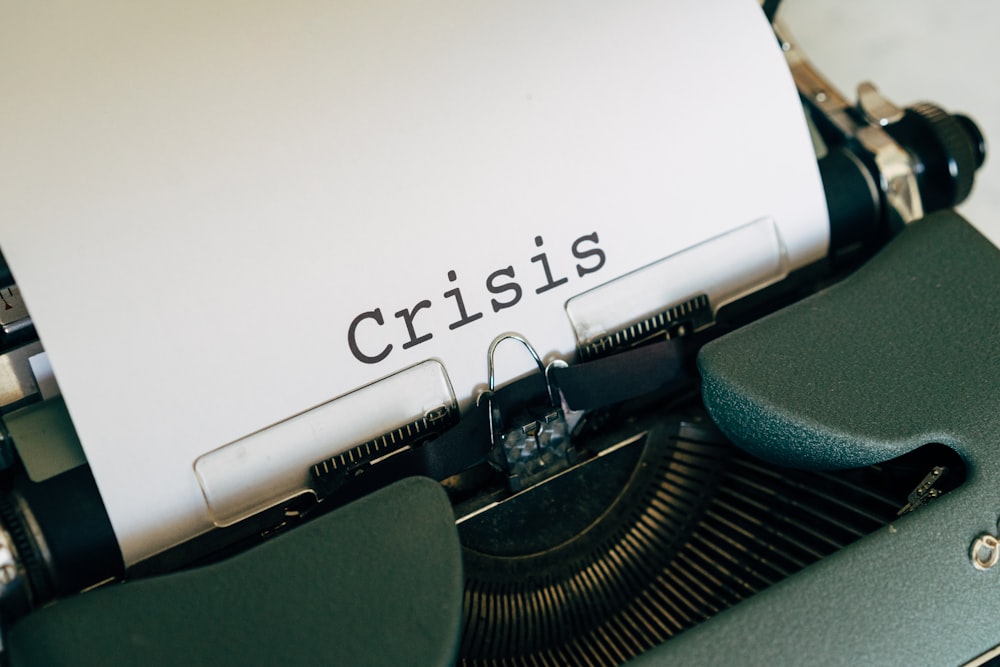
“Eurozone crisis: EU facing economic disaster with two countries at centre of nightmare” by express.co.uk

white and black braille machine

THE EUROZONE is teetering on the edge of another economic crisis with Italy and Greece at the centre of the storm, an economist has warned as coronavirus continues to grip the continent.
Europe is headed for a steep recession amid weeks of ongoing rows that laid bare the 27-member bloc's disunity in the face of the coronavirus crisis. And now an expert has warned the EU could be plunged into another debt crisis, like the one seen in 2009.

Mr Baptist warned a number of countries could default on their debt in the coming months as governments are under pressure to increase their spending limits to counter the economic damage caused by the COVID-19 pandemic.

He said: "A lot of emerging markets are reliant on international investors, international financial flows to get the funding to run a budget deficit, they find it harder to borrow in local currency — although there are a few exceptions.

“At the moment, with this big turn to risk aversion in international markets, even though there may be some emerging world governments that would like to spend more, they’re not going to be able to get funding.”

It comes after EU finance ministers last week agreed on a package of measures worth half a trillion euros to cushion the blow of the coronavirus pandemic.

However it left unresolved the most contentious question of how to share the financial burden that has so bitterly divided them.

The deal left matters open to further arm-wrestling between the divided member states, whose national leaders will meet via video conference on April 23.


Comments

Popular posts from this blog

Italy: Firms shake lockdown using shortcut in coronavirus law

Italy: Firms shake lockdown using shortcut in coronavirus law The government last week extended non-essential business closures to May 3. But more than 100,000 mainly small- and medium-sized companies have applied to keep going or partially reopen. In principle, a key hurdle for companies to do business should be that they can prove they are part of a supply chain to businesses that are deemed “essential” in a government decree, such as food, energy or pharmaceutical companies. But the government, facing a backlog of applications, has clarified Italy’s lockdown laws to say no companies need to wait for government approval to go ahead. More than 105,000 firms have applied to be considered part of essential supply chains, the interior minister said on Wednesday, in a guideline on its website to clarify the lockdown rules. Of those, just over 2,000 have been turned down and told to suspend their business. More than 38,000 are being investigated and the rest are waiting to be...

Italy’s small businesses scrap for survival

Italy’s small businesses scrap for survival Three years ago, this owner of a small business in Italy’s industrial Veneto region lost his life savings, when two regional banks failed after the European debt crisis and were wound down, wiping out shareholders. Today, he is struggling with a new torment: the outbreak of coronavirus in northern Italy that has devastated lives and shut businesses across the region since mid-March. His company’s revenues have dried up even as his overheads remain unchanged. “I am scared for the future,” he said. Many companies rely on local banks for funds and do not have bonds or investors to draw on Northern Italy is home to more than 2m businesses, according to Prometeia, a research and consulting firm. Lombardy, the region around Milan that has been in lockdown since mid-March, has more than 900,000 of them. Andrea Guerra, a former chief executive of Italian eyewear multinational Luxottica and government adviser who is advising small bus...

thechronicleherald.ca: France to tighten controls on non-EU foreign investment

thechronicleherald.ca: France to tighten controls on non-EU foreign investment Currently non-European investments in French companies do not need government approval as long as the stake is 25% or less. PARIS (Reuters) - The French government will tighten restrictions on foreign investments from outside Europe in French companies to limit foreign control over strategic sectors and technologies, the finance minister said on Wednesday. The government already at the start of the year tightened controls on non-European foreign investments, in particular by lowering the threshold for state-vetting to 25% from 33% previously. Le Maire also said that he would add biotechnology companies to a list of sectors that requires government approval for an investment from outside Europe to go ahead. "In this period of crisis, some companies are vulnerable, some technologies are fragile and could be bought by foreign competitors at a low cost. I won't let it happen," Le Mai...