
The Guardian reports “European markets suffer further losses as early rally fizzles”


The Guardian reports “European markets suffer further losses as early rally fizzles”

smartphone on brown wooden surface
Key point: Investors rush to buy the dollar as coronavirus crisis pushes sterling as low as $1.2085
European stock markets have suffered fresh losses after an early rally fizzled amid a mounting corporate and economic toll from the coronavirus pandemic.
Among the biggest losers on the blue chip index were the catering company Compass, which issued a profit warning after being forced to close nearly half its business, holiday firm Tui and the cruise firm Carnival.
Hopes for the UK chancellor’s business support package had driven the FTSE 100 index in London 2% higher in early trading, before renewed fears about the rapid spread of the virus pushed it more than 40 points lower to 5,100, a fall of 0.8%.
Wall Street got off to a positive start, with the Dow Jones up 2.1% and the S&P 500 gaining 2.5%. Like London, however, the rally swiftly fizzled out and shares turned negative. The S&P 500 fell 0.3%, while the Dow slipped 0.1% and the Nasdaq lost 0.5%.
Investors rushed to buy the dollar, considered a safe-haven investment, and sterling fell by 1.5% against the US currency at one stage, to $1.2085.
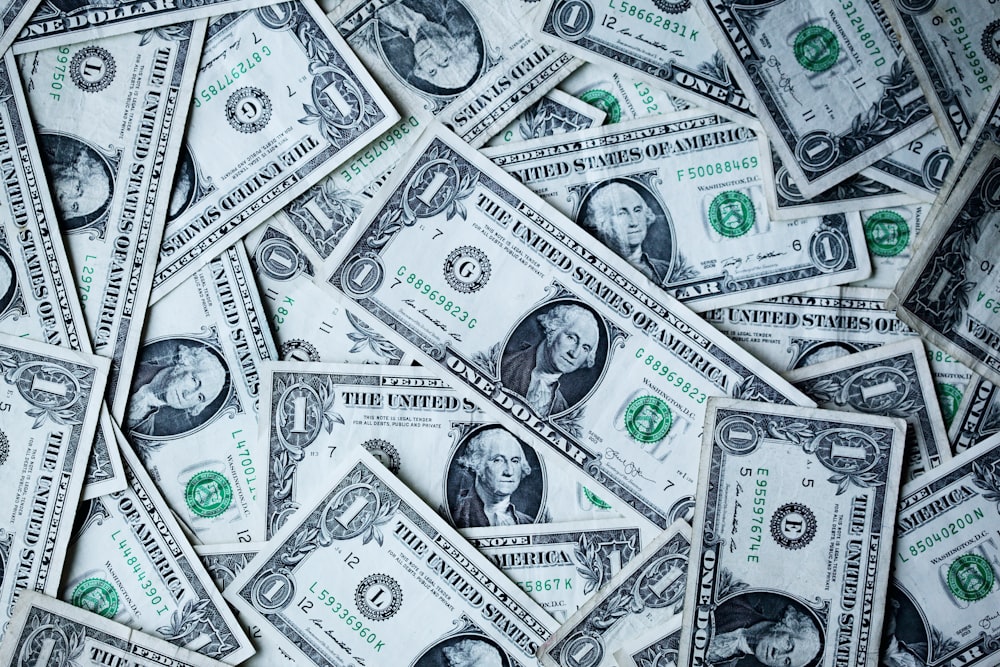
1 U.S.A dollar banknotes
As EU leaders discussed how to combat the crisis in a day-long conference call, Germany’s Dax lost 0.6% and France’s CAC fell 0.64%. Italy’s FTSE MiB see-sawed and is currently trading 1.2% higher, while Spain’s Ibex hung on to gains of 2.9%. In Asia, stock markets had bounced back overnight, with Japan’s Nikkei closing up 5.8% and Hong Kong’s Hang Seng 0.87% higher.
At 4pm GMT on Tuesday, the UK chancellor, Rishi Sunak, along with the prime minister, is expected to unveil a rescue package for businesses threatened with collapse. Most companies in Britain do not have insurance cover for closures caused by infectious diseases, according to the industry body, the Association of British Insurers.
The European Union’s market watchdog is stepping up surveillance of hedge funds and other short-sellers that may be taking advantage of the heavy selling in recent days. The European Securities and Markets Authorities has announced temporary measures that will force investors to hand over more information about their short-selling positions by cutting the threshold for disclosure in half.

Comments

Popular posts from this blog

Italy: Firms shake lockdown using shortcut in coronavirus law

Italy: Firms shake lockdown using shortcut in coronavirus law The government last week extended non-essential business closures to May 3. But more than 100,000 mainly small- and medium-sized companies have applied to keep going or partially reopen. In principle, a key hurdle for companies to do business should be that they can prove they are part of a supply chain to businesses that are deemed “essential” in a government decree, such as food, energy or pharmaceutical companies. But the government, facing a backlog of applications, has clarified Italy’s lockdown laws to say no companies need to wait for government approval to go ahead. More than 105,000 firms have applied to be considered part of essential supply chains, the interior minister said on Wednesday, in a guideline on its website to clarify the lockdown rules. Of those, just over 2,000 have been turned down and told to suspend their business. More than 38,000 are being investigated and the rest are waiting to be...

Italy’s small businesses scrap for survival

Italy’s small businesses scrap for survival Three years ago, this owner of a small business in Italy’s industrial Veneto region lost his life savings, when two regional banks failed after the European debt crisis and were wound down, wiping out shareholders. Today, he is struggling with a new torment: the outbreak of coronavirus in northern Italy that has devastated lives and shut businesses across the region since mid-March. His company’s revenues have dried up even as his overheads remain unchanged. “I am scared for the future,” he said. Many companies rely on local banks for funds and do not have bonds or investors to draw on Northern Italy is home to more than 2m businesses, according to Prometeia, a research and consulting firm. Lombardy, the region around Milan that has been in lockdown since mid-March, has more than 900,000 of them. Andrea Guerra, a former chief executive of Italian eyewear multinational Luxottica and government adviser who is advising small bus...

thechronicleherald.ca: France to tighten controls on non-EU foreign investment

thechronicleherald.ca: France to tighten controls on non-EU foreign investment Currently non-European investments in French companies do not need government approval as long as the stake is 25% or less. PARIS (Reuters) - The French government will tighten restrictions on foreign investments from outside Europe in French companies to limit foreign control over strategic sectors and technologies, the finance minister said on Wednesday. The government already at the start of the year tightened controls on non-European foreign investments, in particular by lowering the threshold for state-vetting to 25% from 33% previously. Le Maire also said that he would add biotechnology companies to a list of sectors that requires government approval for an investment from outside Europe to go ahead. "In this period of crisis, some companies are vulnerable, some technologies are fragile and could be bought by foreign competitors at a low cost. I won't let it happen," Le Mai...